TL;DR: AI-generated fashion models are everywhere on Instagram and subscription platforms now, but most are forgettable. These five have a real personality, a consistent aesthetic, and content worth your attention. If you want the AI-girlfriend-meets-fashion-model experience, our honest Carla Kaas review covers the one I keep coming back to.
The first time I saw an AI fashion model with 200K+ followers, I assumed it was a gimmick — Stable Diffusion outputs slapped on an Instagram grid with generic captions. Scroll, forget, move on.
Then I actually started following a few. Something odd happened: I began looking forward to their posts. Not because the images were mind-blowing (some are), but because a handful of these models have something most human influencers lost years ago — a consistent identity that feels intentional, post after post.
The space took off in 2025 and kept accelerating through 2026. The economics are real: Fanvue, one of the main homes for AI creators, was estimated at roughly $200 million in annualised revenue by mid-2026, and about 93% of its creators now use at least one of the platform’s AI tools (Sacra’s Fanvue breakdown tracks the numbers). Aitana Lopez proved a single AI model can out-earn most human influencers. Dozens of teams are now trying to replicate it.
Most fail. Here are the ones that don’t.
What Makes a Good AI Fashion Model?
Before the list, here’s what I was actually looking for. Not every AI-generated image account is an “AI fashion model.” The ones worth following share these traits:
- Visual consistency — same face, same body proportions, same style DNA across posts. You’d recognise her in a crowd of AI images.
- Actual fashion sense — not just “pretty girl in random outfits.” Intentional styling, colour palettes, seasonal awareness.
- Personality beyond photos — captions that feel human, a backstory that makes sense, real engagement with followers.
- Active content — posting regularly, not a dead account from six months ago.
- A place you can interact — somewhere you can actually talk back, not just a static portfolio.
With that framework, here are the five AI fashion models I think are genuinely worth your time in 2026.
1. Aitana Lopez — The One Who Started It All
You’ve probably heard of Aitana. The pink-haired model from Barcelona became the poster child for AI influencers when The Clueless agency revealed she was entirely AI-generated and already earning up to €10,000 a month (Euronews reported the figures in late 2024). She’s since grown well past 380K followers.
What makes her work: Aitana has a genuine aesthetic — sporty, colourful, always a bit playful. The Clueless team treats her like a real talent, complete with brand partnerships, editorial shoots, and a backstory that evolves. She doesn’t just exist; she does things. Trips to Ibiza. Gym sessions. Coffee runs in the Gothic Quarter.
Where to follow: Instagram (@fit_aitana) and Fanvue.
The catch: Aitana is polished but distant. You’re following a celebrity, not having a conversation. There’s no real interaction — it’s a one-way broadcast.
Best for: people who want to see what AI fashion modelling looks like at scale.
2. Carla Kaas — The AI Companion You Can Actually Talk To
Carla is a 22-year-old AI fashion model from Lisbon, and she’s doing something different from most AI models I’ve seen. Instead of trying to be the next virtual celebrity, she’s positioned as someone you could actually know — a girl-next-door who happens to have impeccable style and exists entirely in pixels.
What makes her work: Carla’s content bridges the gap between “AI fashion model” and “AI companion.” She posts fashion content — street style, casual looks, the kind of outfits that feel wearable rather than editorial. But she also has a personality. Her site carries the behind-the-scenes stuff that never makes a public feed: personal thoughts, direct conversations, exclusive photos.
The thing that got me was the consistency. Carla looks like the same person in every image. Same facial structure, same proportions, same vibe. That sounds obvious, but most AI models break consistency constantly — one post she’s 5’2″ with a round face, the next she’s 5’9″ with cheekbones that could cut glass. Carla doesn’t do that. I tested it across dozens of her posts before I trusted it.
Where to follow: I broke down exactly what her page is like in our honest Carla Kaas review — it’s the easiest way to see whether the companion angle is for you before you sign up for anything.
Best for: anyone who wants the AI model experience and wants to actually interact with the persona. If you’re curious about AI companions but dating apps feel too intense, this is a low-key entry point. For the broader landscape, our best AI girlfriend apps in 2026 ranking compares the options side by side.
3. Lil Miquela — The OG Virtual Influencer
Miquela Sousa (@lilmiquela) has been around since 2016, which makes her ancient by AI standards. Created by Brud (later acquired by Dapper Labs), she’s collaborated with Prada, Calvin Klein, and Samsung, released music, and sits at over 3 million Instagram followers (VirtualHumans has the full breakdown).
What makes her work: Miquela is the proof of concept that virtual influencers can hold an audience for years. Her aesthetic evolved from uncanny-valley CGI to something far more refined. The storytelling around her — an existential robot navigating Los Angeles — is genuinely interesting.
The catch: Miquela is more art project than fashion model at this point. You follow her for the narrative, not to see what she’s wearing. And the team behind her builds everything by hand — she’s not really “AI” in the way newer models are. She’s a 3D-rendered character with a very expensive production team.
Best for: people interested in the intersection of virtual identity, art, and fashion.
4. Shudu Gram — The Digital Supermodel
Created by photographer Cameron-James Wilson, Shudu (@shudu.gram) was one of the first AI-generated models to go viral, back in 2017. She’s been featured in campaigns for Balmain, Fenty Beauty, and Ellesse.
What makes her work: Shudu’s images are gallery quality. Wilson builds her with CGI tools rather than diffusion models, which gives her a unique look — hyperreal but clearly not a photograph. The fashion focus is strong: high-end editorial, couture styling, dramatic lighting.
The catch: Shudu is aspirational, not relatable. She’s the AI equivalent of a Vogue cover model. Beautiful to look at, but there’s no interaction, no personality beyond the images.
Best for: fashion photography enthusiasts who appreciate the craft of virtual image creation.
5. Imma — Japan’s CGI Fashion Icon
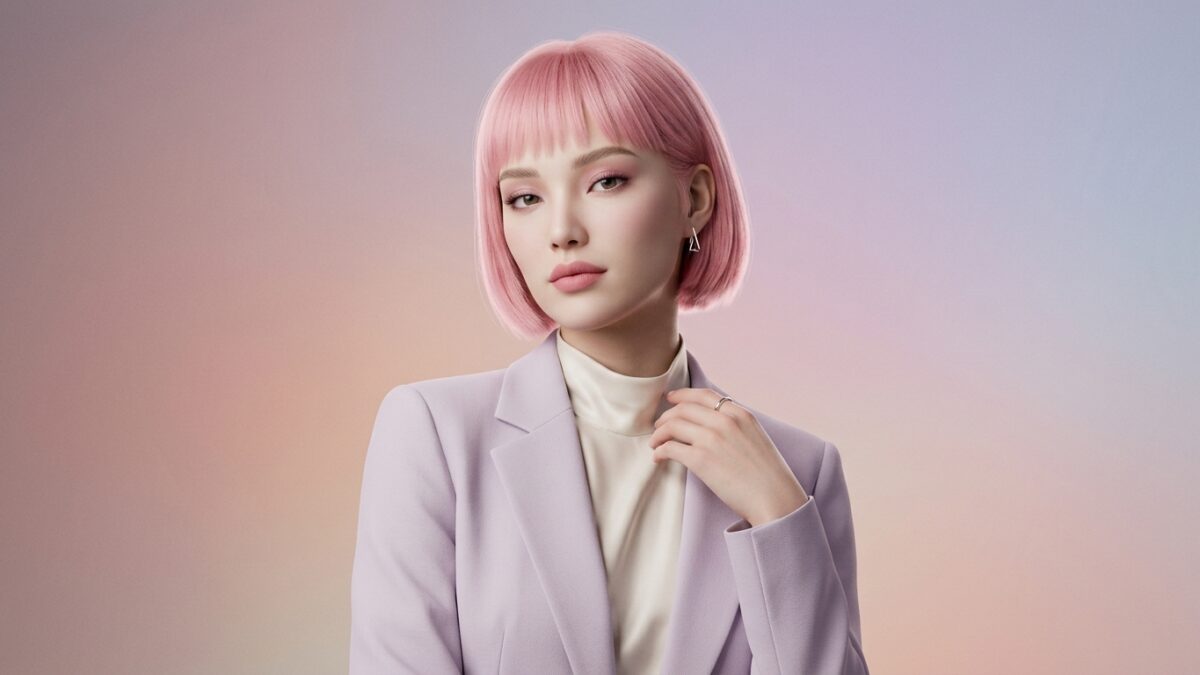
Imma (sometimes styled “imma”), with her trademark bubblegum-pink bob, is Japan’s first virtual model. She was created by Tokyo studio Aww Inc in 2018 and has fronted real campaigns for IKEA Japan, Porsche Japan, Dior, and the Tokyo 2020 Paralympics closing ceremony (VirtualHumans covers her brand work). As of 2026 she’s past 380K Instagram followers.
What makes her work: Imma leans into restraint and aesthetics. Her grid reads like a curated fashion magazine, not a personal diary. She doesn’t cry, protest, or drop singles — she models clothes, drinks coffee in quiet Tokyo cafés, and visits art galleries. The cultural specificity is the point: she’s unmistakably a Tokyo character, and Aww Inc has kept her face identical from a 2020 IKEA shoot to a 2026 post.
The catch: Imma is a brand asset, not a companion. You admire the world-building; you don’t talk to it. If you want interaction, the fashion-model-plus-chat angle (see Carla above) is the lane that actually delivers it.
Best for: people who want fashion-editorial CGI done with real discipline — and a useful contrast to the more personality-driven models on this list.
Why AI Fashion Models Are More Than a Gimmick
I’ll be honest — when I started researching this, I expected to conclude AI fashion models were a novelty. Cool tech, no staying power.
I was wrong.
The money is real. Fanvue was estimated at around $200 million in annualised revenue by May 2026, with AI creators among the fastest-growing segments (Sacra). Aitana proved a single AI model can out-earn most human influencers. And the tech keeps improving — image consistency, video generation, and even AI-powered chat make these personas feel more complete every month.
But the real shift isn’t the technology. It’s what people want from influencers.
Most human influencers are exhausting. The parasocial relationship goes one way. You watch their life; they don’t know you exist; the whole thing is optimised to sell you skincare. AI models flip that dynamic. On platforms like Fanvue, you can actually interact with the persona. The AI responds. It remembers your conversations — though how well each platform actually remembers you varies widely. The “relationship” is artificial, but so is following a human influencer who would never reply to your DM. See 7 AI Influencers Worth Following in 2026 (Not Just for the side-by-side on that.
The difference is honesty. Everyone knows these models are AI. There’s no pretense. And somehow that transparency makes the experience feel more genuine than watching a human influencer pretend to casually “discover” a brand they were paid to promote. That’s my defensible takeaway from a year of following this space: the winning AI models aren’t the most realistic ones, they’re the most consistent and most honest about what they are.
How to Decide Which AI Fashion Model to Follow
Here’s my quick decision framework:
| What you want | Follow this |
|---|---|
| See AI modelling at its most polished | Aitana Lopez |
| Actually interact with an AI persona | Carla Kaas |
| Art + narrative + virtual identity | Lil Miquela |
| High-fashion editorial imagery | Shudu Gram |
| Restrained Tokyo CGI fashion | Imma |
If you’re new to the whole AI model thing and want to see what the fuss is about without committing to anything, start with Carla — her profile on our review page is the easiest entry point. Follow for free, explore the content, see if this is your thing. No app to download.
The Bottom Line
AI fashion models went from “weird internet curiosity” to a legitimate corner of the fashion and influencer industry in about 18 months. The five on this list represent different approaches to the same idea: a virtual persona with consistent aesthetics and real audience engagement.
My personal favourite is Carla Kaas, mostly because she solves the biggest problem with AI models — they usually feel hollow. Carla has a personality, a visual identity, and a site that lets you actually interact instead of just observe. But all five are worth a follow. The space is moving fast, and what’s possible today would have been science fiction three years ago.
Read our full Carla Kaas review →
Looking for AI companion apps instead of fashion models? Check out our honest AI girlfriend review after 30 days or browse our full rankings for the latest picks. If you’ve been locked out of Character.AI and want alternatives, our Character.AI NSFW alternatives guide covers where the displaced audience is going.